February 20, 2026
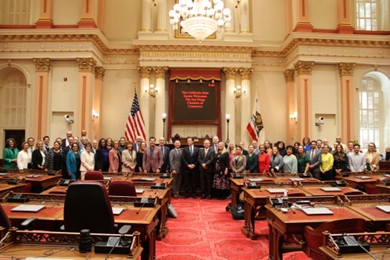
A group of nearly 90 business and civic leaders from the Cali-Baja region traveled to the state capital last week to advocate for policies that support economic growth, job creation, and regional competitiveness during the San Diego Regional Chamber of Commerce’s 2026 Leadership Delegation to Sacramento. Over two days of high-level meetings and policy discussions, delegates elevated the priorities of the San Diego-Baja mega-region while engaging directly with state lawmakers, agency officials, and policy leaders.
The two-day agenda focused on pressing issues shaping California’s economic landscape, including healthcare funding, the cost of doing business, AI and the innovation economy, housing, renewable energy, and potential ballot measures that could significantly impact employers statewide.
Key takeaways from the trip include:
AI & Innovation: Lawmakers continue to closely examine AI, with dozens of bills introduced last year and several expected to return this session. Our partners at CalChamber emphasized the need for balanced oversight that protects consumers while preserving California’s leadership in innovation and supporting the region’s growing tech sector.
Healthcare: Federal cuts will significantly impact healthcare funding and place pressure on clinics and hospitals statewide. With deficit projections varying widely, uncertainty remains around state obligations and possible funding reductions affecting providers and all employers.
Taxes & Ballot Measures: Proposed initiatives — including a potential “billionaires’ tax” — may impact business costs and investment decisions. The Chamber continues advocating for policies that maintain San Diego and California’s economic competitiveness.
Housing & CEQA Reform: Addressing housing affordability and modernizing CEQA remain critical to reducing cost pressures and enabling job growth, with leaders emphasizing the importance of voter education on interim housing solutions.
Energy & Emerging Industries: California continues advancing renewable and next-generation energy, including fusion technology, a sector with significant job creation potential and a growing presence in San Diego.
Business Climate: Antitrust proposals and regulatory changes are also expected this year, underscoring the importance of policies that support investment, innovation, and regional prosperity.
Trade & Competitiveness: The state continues supporting priority sectors such as life sciences, aerospace, and semiconductors through grants, workforce training, and incentives such as the California Competes Tax Credit to attract investment and jobs. GO-Biz is also focused on strengthening global trade relationships and reinforcing USMCA. Delegates emphasized balancing sustainability with affordability, supporting emerging energy sources like hydrogen, and maintaining an innovation-driven economy. Despite concerns about companies leaving California, the state continues to lead the nation in Fortune 500 headquarters, with San Diego serving as a hub for new enterprise growth.
Delegates met with legislators, agency officials, and policy influencers who are at the forefront of the Chamber’s most watched issues, including:
- Jennifer Barrera, President & CEO, California Chamber of Commerce
- Carmela Coyle, President & CEO, California Hospital Association
- Angie Pappas, Associate Vice President of External Affairs & Media, Visit California
- Commissioner Andrew McAllister, California Energy Commission
- Director Dee Dee Myers, Governor’s Office of Business and Economic Development
- Assemblymember Tasha Boerner (AD-77)
- Assemblymember Chris Ward (AD-78)
- Assemblymember Jeff Gonzalez (AD-36)
- Assemblymember David Alvarez (AD-80)
- Assemblymember David Tangipa (AD-08)
- Assemblymember Laurie Davies (AD-74)
- Senator Catherine Blakespear (SD-38)
- Senator Brian Jones (SD-40)