February 24, 2026
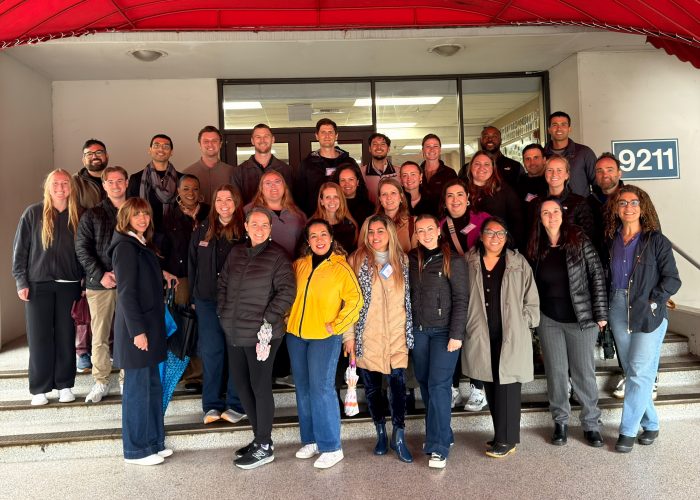
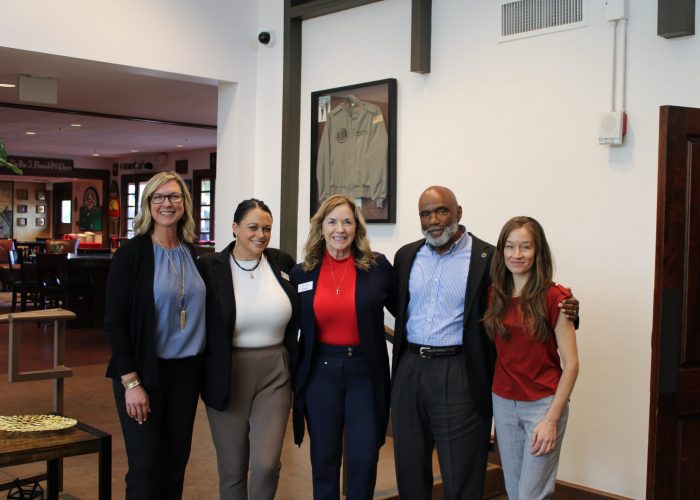
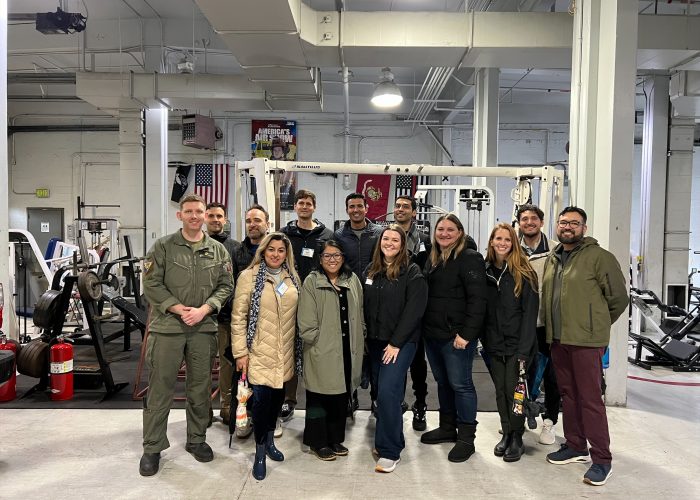
The LEAD Impact cohort discovered how the military shapes our economy and strengthens our community.
San Diego has the largest concentration of military assets in the world. Our region is home to more than 110,000 active-duty service members and 30,000 civilian personnel, and 22% of San Diego’s gross regional product (GRP) is tied to defense-related spending1. An industry at this scale shapes not only our economy, but our identity, and it deserved a closer look from the LEAD Impact cohort.
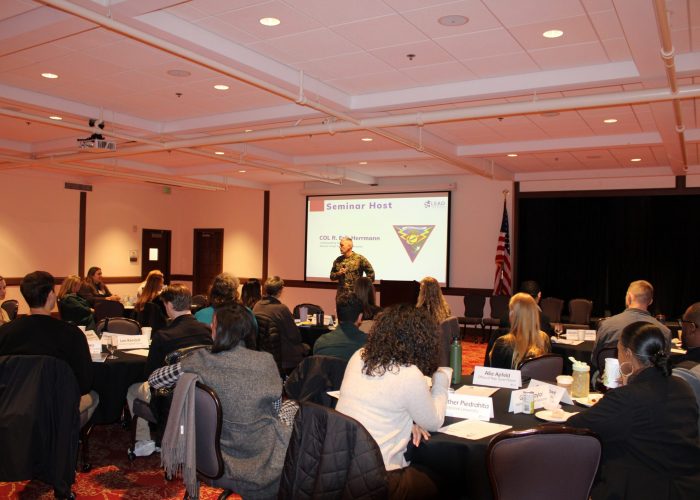
February’s seminar, focused on Military in San Diego, was hosted at Marine Corps Air Station Miramar (MCAS Miramar). The Impact class went behind the gates to spend the day engaging directly with military leaders and gaining a deeper understanding of the military community that anchors our region.
We began with RADM David Boone, USN (Ret.), President and CEO of San Diego Military Advisory Council (SDMAC). SDMAC’s mission is to promote national security readiness by advocating for the defense community, including active-duty service members, veterans, and their families. David provided a comprehensive overview of the military’s footprint across San Diego County and shared highlights from SDMAC’s annual Military Economic Impact Report. In 2025, nearly 357,000 jobs were tied to the defense industry, generating $61.3 billion in GRP. Beyond the figures, David emphasized the stabilizing role defense dollars play in our local economy. During the pandemic, the military’s presence helped cushion the decline in spending and accelerate regional recovery. We also heard about ongoing legislative efforts designed to support service members and veterans at the local, state, and federal levels.
After setting the economic framework, we shifted to a critical question: While the defense industry drives immense economic output, how are service members, veterans, and their families faring in San Diego?
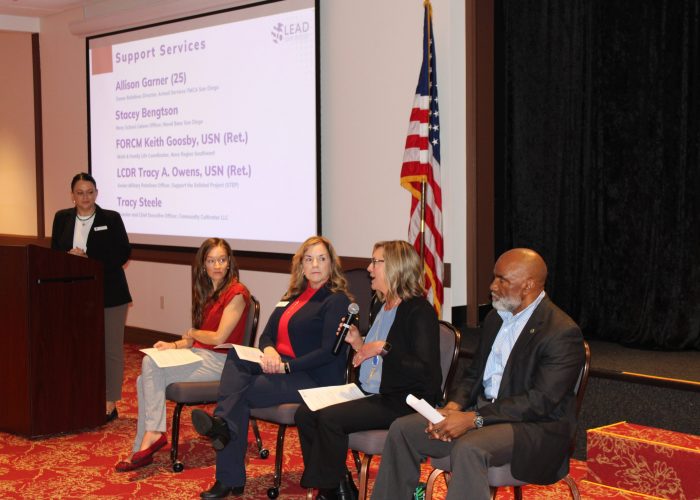
To explore that, we moved into a panel moderated by Allison Garner (25), Donor Relations Director at Armed Services YMCA San Diego. We were honored to welcome Stacey Bengtson, Navy School Liaison Officer at Naval Base San Diego; FORCM Keith Goosby, USN (Ret.), Work & Family Life Coordinator for Navy Region Southwest; LCDR Tracy A. Owens, USN (Ret.), Senior Military Relations Officer at Support the Enlisted Project (STEP); and Tracy Steele, Founder and CEO of Community Cultivator LLC.
A key theme throughout the discussion was the misconception surrounding military compensation. Base pay is determined by rank and years of service, not by station location. In one of the most expensive cities in the country, that reality creates significant financial pressure. The sticker shock of housing, gas, and childcare can be overwhelming, especially for families relocating from lower-cost regions.
Tracy Owens of STEP described the organization’s financial wellness programs, which aim to help families “break free from survival mode and build a path to financial wellness.” She shared a sobering statistic: financial strain can triple the risk of suicide. Supporting military families is not simply an economic issue, it is a public health and community imperative. San Diego’s collaborative network of nonprofits, military support offices, and community leaders plays a vital role in protecting those who protect us.
Tracy Steele shed light on the challenges faced by military spouses, who may be asked to relocate every two to three years. Frequent moves make it difficult to maintain employment and build long-term professional networks. Employers may hesitate to hire someone they believe will soon leave, while families themselves may hesitate to invest deeply in a community they perceive as temporary. Yet this is precisely why engagement matters. 40% of military families choose where to settle permanently based on spousal employment opportunities. When spouses are connected to meaningful work, it strengthens both the family and the long-term stability of our regional workforce.
Keith Goosby and Stacey Bengtson highlighted the extensive programs offered through Navy Region Southwest and installation support services, including workshops and courses focused on stress management, career development, and navigating family transitions. The overwhelming takeaway from the panel was the depth of genuine care these leaders have for service members and veterans.
Following lunch, we welcomed RADM Terry Kraft, USN (Ret.), President and CEO of the USS Midway Museum. The Midway is consistently ranked among the top attractions in the city and serves as both a tourist destination and a living classroom. Terry shared the museum’s origin story, the impact of its 750 dedicated volunteers, and the robust educational programming that brings naval history to life.
What made his remarks especially powerful was his personal connection. Terry previously served aboard the USS Midway, flying 40 combat missions during Operation Desert Storm. His firsthand leadership lessons, drawn from high-stakes operations, offered a compelling perspective on service, accountability, and resilience.
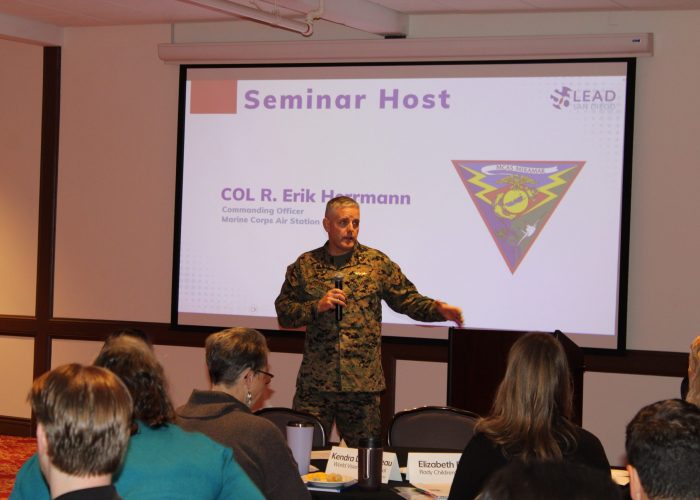
We were also honored by a visit from MCAS Miramar’s Commanding Officer, Col. R. Erik Herrmann. He described his role as akin to that of a mayor. He oversees what is essentially a self-contained city behind the gates on Miramar Road, complete with housing, utilities, roadways, and emergency services. One in four Marines is stationed in San Diego, and approximately 10,000 Marines serve aboard MCAS Miramar alone. Col. Herrmann graciously answered our questions before inviting us to see operations firsthand.
Despite rainy weather, the cohort toured base facilities, including the Air Traffic Control tower. We met Marines who operate the air station, heard their personal stories, and gained insight into daily life on base. It was an honor to engage with the men and women whose leadership, discipline, and sacrifice underpin both our regional economy and our national security.
San Diego’s military presence is more than an economic engine, it is a community. It is families navigating transitions, spouses seeking opportunities, veterans building second careers, and active-duty leaders serving with extraordinary commitment. Our time at MCAS Miramar reminded us that behind every data point is a person, and behind every uniform is a story.
As the LEAD Impact cohort continues to explore the industries shaping our region, we do so with a deeper appreciation for the military community. Their impact on San Diego is profound, and our responsibility, as civic and business leaders, is to ensure that those who serve here can thrive here.
Click here to learn more about LEAD Impact.
Follow LEAD on LinkedIn and Instagram to keep up with the cohort!
1 SDMAC 2025 Military Economic Impact Report (MEIR)